
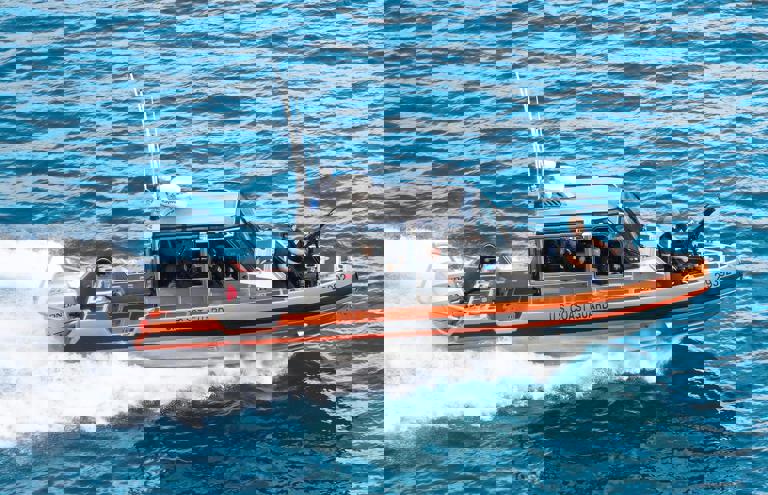
Emergency services launched a dramatic nighttime rescue operation on the rugged Devon coastline after two kayakers became stranded by fast-moving tides just after sunset. The incident unfolded late Friday night, prompting an urgent response from local coast guard teams and volunteer lifeboat crews. The kayakers, described by authorities as "experienced adventure enthusiasts," raised the alarm when they realised they were unable to return to shore due to swiftly changing currents and deteriorating light conditions.
Eyewitnesses from the nearby coastal village reported seeing lights flickering offshore, alerting them to possible distress. "We spotted their headlamps bobbing in the water and heard faint shouts for help," said local resident Sarah Beaumont. "It was clear they were in trouble and not making any headway back." Calls were quickly relayed to the HM Coastguard, triggering a full-scale response involving multiple agencies.
Responders say the timing was critical, as the tide along this stretch of the southwest coast is notoriously unpredictable after dusk. Chief Coastguard Officer Mark Jennings explained, "Once the sun set, visibility dropped sharply, and the currents became riskier. In these conditions, every minute counts as the temperature also plunges rapidly, increasing the risk of hypothermia for anyone in the water."
RNLI lifeboats from Brixham and Salcombe stations were immediately deployed, navigating turbulent midnight swells and challenging winds. The crews used searchlights, thermal imaging cameras, and flares to pinpoint the kayakers' exact location. According to the RNLI, the search stretched for nearly an hour as communication was hampered by darkness and persistent waves breaking against the rocky shoreline.
After a tense search, rescuers finally located the two individuals clinging to a partially submerged rock outcrop roughly half a mile from shore. Both kayakers were found wearing life jackets and wetsuits, which authorities say were lifesaving choices that prevented more serious consequences. The cold water and continuous spray posed additional hazards as the rescue operation unfolded.
Speaking after the rescue, one of the kayakers, James Holden, 34, described the ordeal as "utterly terrifying". "We thought we’d judged the tide right, but it turned much faster than we expected," he said. "Once we realised we couldn’t paddle against it, we tried to stay calm and stick together, then used our torches to signal for help." His companion echoed the relief they felt upon seeing the rescue crews arrive.
Medical teams were on standby onshore, and both kayakers were evaluated for hypothermia and shock. Paramedics reported that, while cold and shaken, the pair escaped serious injury and were able to return home after a precautionary assessment at a local hospital. Coast guard officials stress that their rapid decision to call for help likely averted a tragic outcome.
Local authorities used the incident to reinforce vital water safety messages. "This is a stark reminder of how quickly conditions can change at sea, even for those with experience," said Coastguard spokesperson Amelia Rowe. She urged all water sports enthusiasts to check tide times, carry communication devices, and always inform others of their planned routes before venturing out.
Statistics from the RNLI show that more than 50 kayakers required coastal rescue in southwest England alone last year, many due to unexpected tidal shifts or sudden weather changes. Water safety experts warn that the region's unique geography – with its hidden inlets and swift currents – can present deceptive risks to even the most seasoned paddlers and swimmers.
Community members have praised the dedication and coordination displayed by the rescue teams, many of whom are volunteers. "We’re incredibly grateful to those who put themselves at risk to make sure everyone gets home safely," remarked local councillor Peter Reeves. Fundraising efforts are already underway in the area to support the ongoing work of the RNLI and coast guard services.
As summer approaches and more people take to British waters, officials reiterate the importance of vigilance and preparation. "Adventure can quickly turn into emergency without warning," added Officer Jennings. The Devon rescue serves as a timely warning to adventurers, reinforcing the power of nature and the life-saving value of swift, coordinated emergency responses along the UK’s beloved coastline.